



Microsoft 365 Outage on 12 November 2026: What Failed and What to Do
Microsoft says a process on affected servers became overwhelmed, taking Outlook, Teams and Copilot down for many users. Here is what it has said, and what to check while the incident is still open.
Updated November 12, 2026

By Jack AI Tech Brief
Editorial team
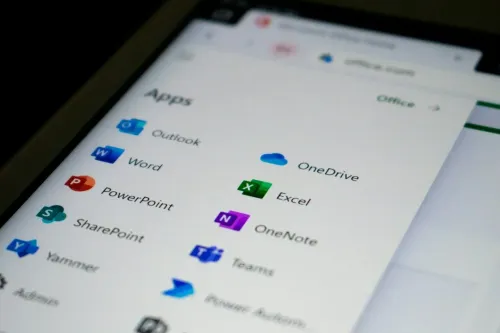
In short: A Microsoft 365 outage on 12 November 2026 disrupted Outlook, Teams and Copilot for many users [1]. Microsoft says a process on affected servers that establishes secure connections became overwhelmed, and that there is no sign of a cyber attack [3]. At the last update we could read, on 13 November, the outage was not fully resolved [2].
Key Facts
- Reported start time (Microsoft, per Security Affairs)
- 1:26 p.m. ET, 12 November 2026
- As of November 12, 2026
- Outlook reports to Downdetector in the United States
- More than 130,000
- As of November 12, 2026
- Microsoft's account of the cause
- A process on affected servers that establishes secure connections became overwhelmed
- As of November 13, 2026
What happened on 12 November?
Security Affairs reports that Microsoft put the start of the outage at 1:26 p.m. ET on 12 November 2026 [2]. ABC reports that Microsoft said the issues started about 5:15 a.m. AEDT on 13 November, which is about 1:15 p.m. ET on 12 November [3].
Earlier that day, the company had already been investigating problems connecting to Exchange Online mailboxes in the Americas, and it later confirmed that users worldwide could be affected [2]. Euronews reports that in the United States, more than 120,000 users had reported Outlook problems to Downdetector at around 1:30 p.m. Eastern time, a figure that rose to more than 130,000 [1].
Which Microsoft 365 services were affected?
Outlook drew the most reports. Euronews reports more than 46,000 Downdetector reports for Microsoft 365 as a whole and around 3,000 for Teams [1].
Microsoft's notice, as reported by Security Affairs, names Exchange Online, Teams, SharePoint Online, Microsoft 365 Copilot and Microsoft Defender XDR [2]. ABC's live blog shows a fuller list from Microsoft. Features that interact with Exchange Online and email services are affected. Power BI is also affected: all users may intermittently be unable to export reports with sensitivity labels to PDF [3].
Which services depend on Exchange Online?
Microsoft's list ties several services to Exchange Online. It says SharePoint Online features that depend on Exchange Online may be impacted, and that core messaging and online meetings in Teams remain largely functional [3]. Security Affairs reports the knock-on effect for AI tools: Copilot and competing AI services could not access users' inboxes because the underlying Microsoft services were unavailable [2].
What has Microsoft said about the cause?
Microsoft's explanation changed during the day. It first blamed heavy workloads across several regions, then found that increased traffic was not the cause [2]. Its later account, quoted in ABC's live blog, says "a process on the affected servers responsible for establishing secure connections becomes overwhelmed, causing the servers to stop processing requests" [3].
Microsoft also said it had begun reverting a recent network configuration change that correlates with the start of impact [3]. On X, it described "a number of servers being unexpectedly unavailable" that strained the rest of the infrastructure [2].
Euronews reported the overload earlier. It said part of the infrastructure was under higher than normal load, which was probably responsible for the connection errors [1]. Read Microsoft's wording as its account, not as a settled root cause.
Was it a cyber attack?
Microsoft says there is no sign of one. A spokesperson told ABC: "There's no indication this is a cyber attack" [3].
Is it fixed yet?
Not in the last update we could read. Security Affairs reported that "the massive outage has yet to be resolved" at the time of its report [2]. Euronews reported that Microsoft had resolved the Teams issues in North America, although some users were still complaining of connection difficulties [1].
In ABC's live blog, at 1:00 p.m. AEDT on 13 November, Microsoft said it was "seeing positive results" from restarting affected infrastructure. By 1:26 p.m., the Microsoft update page no longer said that, according to ABC [3]. Microsoft said it was using management measures in a specific location to reduce load on the affected infrastructure [3].
Microsoft also warned that servers it had returned to service "can become unresponsive again once they begin receiving traffic" [3]. It said that as capacity is restored, "users may experience a gradual recovery as their clients reconnect to the service" [3].
What should IT teams and users do now?
Microsoft's workaround guidance was not in the pages we could read. Security Affairs advises IT teams to check the Microsoft 365 admin center for updates rather than make assumptions about the cause [2]. The steps below build on that advice and on the facts above, but they are not Microsoft instructions.
- Check the incident records in the Microsoft 365 admin center. Microsoft's post cites EX1550543 and MO1550821 [2].
- Expect a gradual return. Clients reconnect as capacity comes back [3], so service may return in stages.
- Treat the service as unstable until Microsoft confirms recovery in its posted update. Microsoft says restored servers can become unresponsive again once traffic returns [3].
- Keep your own timeline. Note when your users first saw failures and when they cleared, so you can compare them with Microsoft's posted times when they are published.
What is the next fact to check?
The most useful next fact is Microsoft's later update to notice MO1550821, if Microsoft publishes one. Until then, the figures and quotes above are the best sourced account we have.
Frequently Asked Questions
When did the Microsoft 365 outage start?
Security Affairs reports that Microsoft put the start at 1:26 p.m. ET on 12 November 2026 [2]. ABC reports that Microsoft said the issues started about 5:15 a.m. AEDT on 13 November [3].
Was the Microsoft 365 outage a cyber attack?
Microsoft says there is no indication that it was. A spokesperson said there is "no indication this is a cyber attack" [3].
Is Outlook back up?
At the last update we could read, on 13 November 2026, Microsoft was still working to restore service and had removed its earlier optimistic wording [3]. Check the Microsoft 365 admin center for the current status.
Sources
- 1.
- 2.
- 3.
Tags
Written with AI assistance and reviewed by a human editor before publication.How we produce this content.