How a Mao meme turned into a China crisis for Mbappé, Real Madrid and La Liga
A six-month-old interview, a meme and a few Chinese apps were enough to put a football star, a club and a league in a sponsorship crisis.
Updated October 28, 2026
Written with AI assistance and reviewed by a human editor before publication.How we produce this content.
In short: In late October 2026, Kylian Mbappé faced a commercial and public relations crisis in China after a backstage clip about a meme depicting him as Mao Zedong spread online. Three Chinese companies ended their deals, state television suspended La Liga broadcasts, and Mbappé, Real Madrid and La Liga all issued apologies.
Key Facts
- Chinese brands that ended deals
- 3: Dongpeng Beverage, Mengniu and Milkground
- As of October 27, 2026
- Mbappé apology
- Published as a statement on Tuesday, 27 October 2026
- As of October 27, 2026
- Broadcast suspension
- China Media Group suspended La Liga matches and games featuring Mbappé
- As of October 27, 2026
What happened in the Mbappé China row?
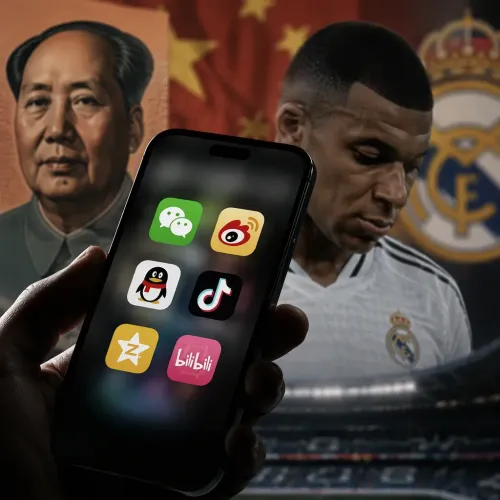
In late October 2026, Kylian Mbappé became the centre of a commercial and public relations crisis in China. A backstage clip from the French talk show The Bridge, filmed in April, went viral after it was posted on Monday. In it, Mbappé laughs at a meme that shows his face on a figure the reports describe as Mao Zedong, and calls the figure “a Chinese dictator” [3]. The clip has since been taken down [2].
By Tuesday, three Chinese companies had ended their deals with him, and state television had halted broadcasts [1][3]. Mbappé apologised in a statement that called his comment “ill-judged” and said it had hurt many people in China [1].
Which brands and broadcasters cut ties?
Dongpeng Beverage, the dairy company Mengniu and the cheese maker Milkground all ended their partnerships with him [1][3]. Dongpeng said it “firmly opposes” behaviour that offends national sentiments and has a zero-tolerance policy toward it [1]. Mengniu, China’s largest dairy producer, used similar wording [1].
China Media Group said it had suspended broadcasts of La Liga matches and of games featuring Mbappé, and that it had removed his adverts [1]. His face had been in advertising across China, from subway stations to the inside of lifts [1]. Before the row, he was widely adored in China and had millions of followers on Chinese social media [2].
What did Mbappé say in his apology?
Mbappé published the statement on his social media accounts on Tuesday, in French, Mandarin and English [2]. He said he had “reacted to an image of myself” during the interview, and wrote, “I apologise to everyone my words have upset” [2]. He added that the remark was “absolutely not my intention” and that he has “deep respect for the Chinese people and their history” [2].
China’s foreign ministry spokesman, Guo Jiakun, said Beijing would take the apology seriously. The ministry's words were “We take seriously the apology the individual concerned has made” [2]. The statement did not end the public anger, as Al Jazeera's reporting makes clear [2].
How did social apps speed up the row?
The reaction moved through Chinese platforms quickly, and each one acted in its own way. Three patterns stand out.
- Trending: Dongpeng’s exit was the top trending topic on Weibo, and “Football fans boycott Mbappé” trended too [1].
- Account action: Xiaohongshu froze Mbappé’s account, which had at least a million followers, and Weibo blocked users from following it [2].
- Clip and meme: the clip was filmed in April but reached a wide audience in October, and the creator of the meme confirmed to ABC that the image was AI-generated [3].
YouTube, Instagram and Reddit are blocked in mainland China, and users generally cannot reach them without a VPN [3]. The Chinese sports platform Dongqiudi said it would not translate Mbappé’s remarks [3]. A single clip can therefore move through a set of local apps, each with its own rules, before a club or brand has said anything.
How did Chinese fans react?
The reaction was not only corporate. Some Weibo users said the remarks were hurtful, and one wrote that “His remarks were hurtful toward China and the Chinese people” and that they “cannot be translated” [2]. Others referred to the controversy obliquely. One user wrote, “He's talking about the person on the 100-yuan note” [3].
France 24 reported that some users were angry and told Mbappé not to come to China [1].
Why did a meme become a political issue?
Satire about Mao is sensitive in China. Al Jazeera notes that Tibet and Hong Kong “have previously caused controversy in China and been dumped by sponsors” [2]. A joke about a founding leader therefore carries more weight than a joke about a footballer, even when the speaker did not intend harm.
Mbappé was already familiar with the dictator memes. In a September interview with France Football, he acknowledged the humour behind AI-generated memes that depicted him as a dictator, but said he disliked being compared to such figures [3]. The April clip was filmed before that interview. In it, he said he would “use it a lot with my friends online” about the meme that made him laugh most [3].
Why did Real Madrid and La Liga apologise?
Real Madrid issued its own apology on Wednesday [2]. Shoppers could still see the club's jerseys on sale in Beijing, but AFP found none bearing Mbappé's name at the Adidas flagship store in the Sanlitun district [2]. La Liga president Javier Tebas said the league “deeply regretted” the comments, then met China’s ambassador to Spain to seek solutions to the episode [2]. He also said China “is and will continue to be a strategic partner for La Liga” [2].
Reuters reported that Tebas was considering a trip to China to limit the risk of a large financial loss for Spanish football [2]. The apologies did not end the row. Al Jazeera reported that Mbappé still struggled to calm anger on Chinese social media on Wednesday, despite his apology [2].
What can sports teams take from this?
The main lesson is that old content can return with a new audience. The interview was filmed in April, and the row started in late October [3]. Sponsors answered with public statements that named the offence [1].
The commercial stakes explain why the club and the league moved so fast. Al Jazeera describes the Chinese market as lucrative and notes that the row highlighted the risks for athletes and brands operating in it [2]. For a player whose face sells products, that risk is as much financial as reputational.
Two checks follow from this case. A team can review archived interviews before a player's content is used in a sensitive market, and it can prepare a response for the platforms where a clip is likely to spread, since Chinese apps acted directly on the account [2].
The show that aired the clip also responded. The Bridge apologised on Wednesday, saying it regretted that the clip had offended people in China and elsewhere [3].
Frequently Asked Questions
Did Mbappé name Mao Zedong in the clip?
The clip shows him laughing at a meme that depicts him as Mao Zedong, and calling the figure “a Chinese dictator.” The creator of the meme told ABC the image was AI-generated.
Has Mbappé apologised?
Yes. On Tuesday he published a statement in French, Mandarin and English that said he was sincerely sorry and had no intention to cause hurt.
How did the Chinese government respond?
A foreign ministry spokesman said China took the apology seriously, while the broadcast and sponsor measures were already in place [s2].
Did Real Madrid and La Liga apologise too?
Yes. Real Madrid issued an apology on Wednesday, and La Liga and its president Javier Tebas also apologised, then met China’s ambassador to Spain.
Sources
- 1.
- 2.
- 3.